Image description
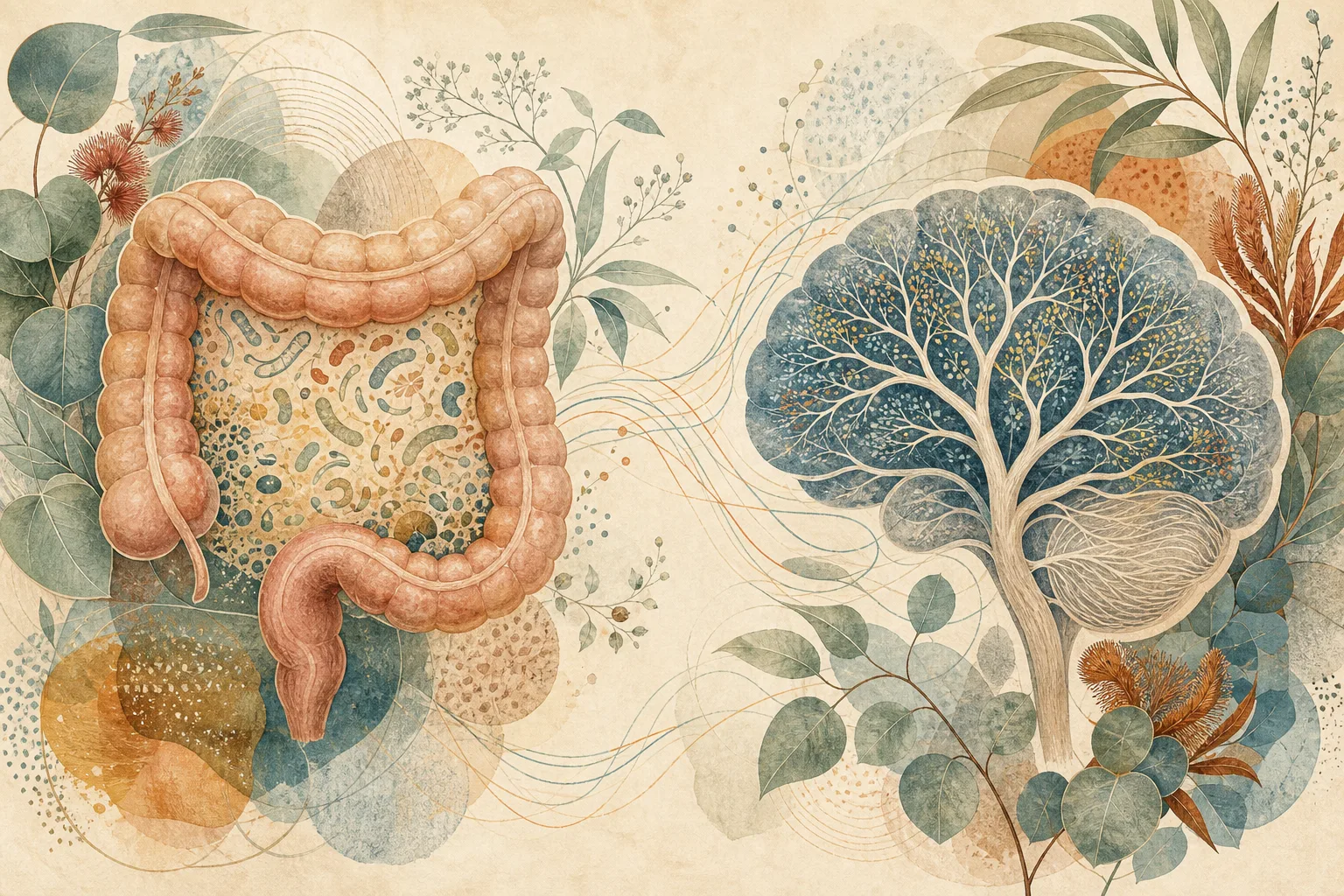
On the left, a pale terracotta large-intestine form contains abstract microbial shapes and botanical textures. On the right, a dark blue brain-like branching form sits among leaves and soft coloured circles. Fine green, ochre and terracotta threads arc loosely between the two forms without arrowheads. The cream paper background and surrounding plant motifs make the composition feel like an editorial studio board. See the two large conceptual forms first, then the loose threads between them and the surrounding details. The threads have no direction or endpoint hierarchy. They are a visual cue for complexity, not a sequence or an explanation. This does not show a biological pathway, prove that gut activity causes a mental or neurological outcome, or represent a person's body. It contains no diagnosis, treatment, symptom, medication, test, target brain state or health result. The cover introduces a learning journey about context and connections; its individual claims must be read in the reviewed journey content.
Gut–Brain Studio
Practical, non-food skills: how your gut and brain talk, a slow-breathing practice, and a gentle plan for rough gut days.
These are the lessons available to explore now. You can stop and return at any time.
The settling breath
Practise a slow-breathing rhythm and explain what it can and cannot do for the gut–brain conversation.
Open lessonH2 · 5 minYour rough-day plan
Put together a small, non-food plan for days when your gut is loud, and know which symptoms belong with your doctor instead.
Open lessonGeneral gut-health education from your care team. It doesn't replace advice from your doctor or an Accredited Practising Dietitian — please talk to them about your own situation.